Overview
Crux is a framework for building cross-platform applications with better testability, higher code and behavior reuse, better safety, security, and more joy from better tools.
It splits the application into two distinct parts, a Core built in Rust, which drives as much of the business logic as possible, and a Shell, built in the platform native language (Swift, Kotlin, TypeScript), which provides all interfaces with the external world, including the human user, and acts as a platform on which the core runs.
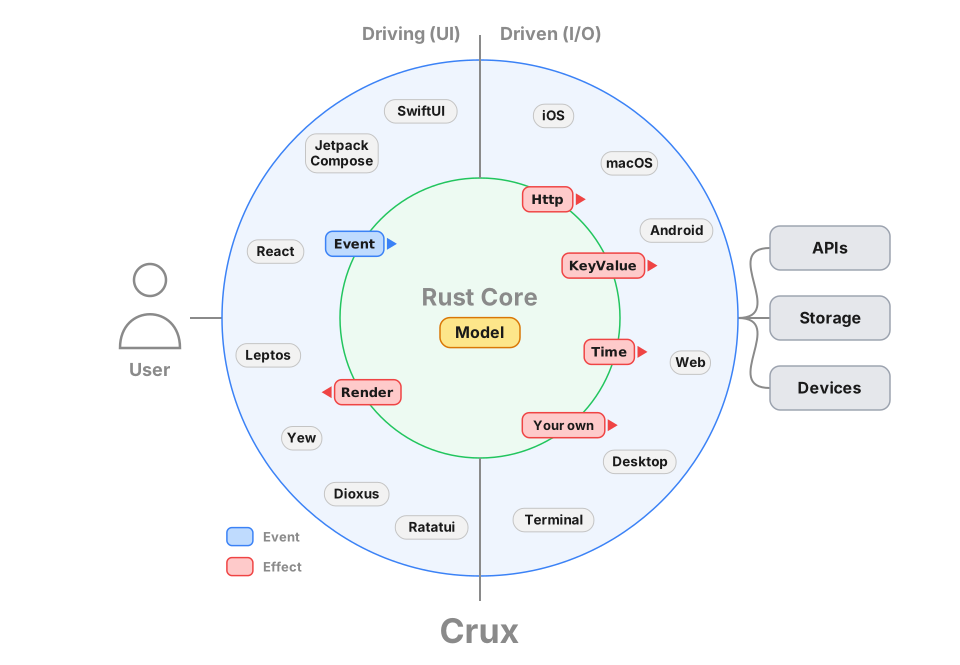
The aim is to separate three kinds of code in a typical app, which have different goals:
- the presentation layer in the user interface,
- the pure logic driving behaviour and state updates in response to the user's actions, and
- the effects (or I/O) layer where network communication, storage, interactions with real-world time, and other similar things are handled
The Core handles the behaviour logic, the Shell handles the presentation layer and effect execution (but not orchestration, that is part of the behaviour and therefore in the Core). This strict separation makes the behaviour logic much easier to test without any of the other layers getting involved.
The interface between the Core and the Shell is a native FFI (Foreign Function Interface) with message passing semantics, where simple data structures are passed across the boundary, supported by cross-language code generation and type checking.
To get playing with Crux quickly, follow Part I of the book, from the Getting Started chapter onward. It will take you from zero to a basic working app on your preferred platform quickly. From there, continue on to Part II – building the Weather App, which builds on the basics and covers the more advanced features and patterns needed in a real world app.
If you just want to understand why we set out to build Crux in the first place and what problems it tries to solve, before you spend any time trying it (no hard feelings, we would too), read our original Motivation.
API docs
There are two places to find API documentation: the latest published version on docs.rs, or the very latest master docs if you too like to live dangerously.
- crux_core - the main Crux crate: latest release | latest master
- crux_http - HTTP client capability: latest release | latest master
- crux_kv - Key-value store capability: latest release | latest master
- crux_time - Time capability: latest release | latest master
You can see the latest version of this book (generated from the master branch) on Github Pages.
Crux is open source on Github. A good way to learn Crux is to explore the code, play with the examples, and raise issues or pull requests. We'd love you to get involved.
You can also join the friendly conversation on our Zulip channel.
Design overview
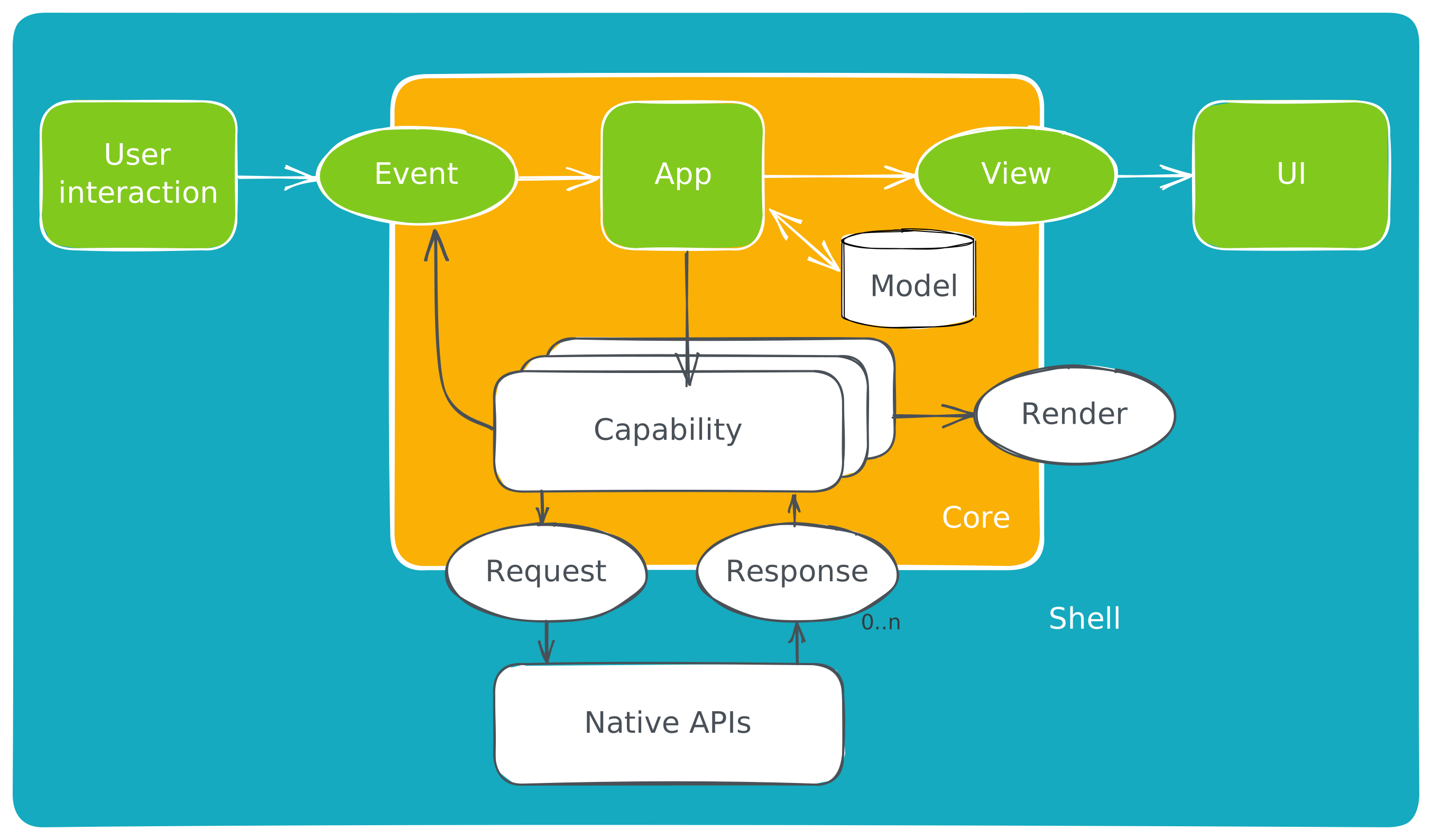
The architecture is event-driven, with state management based on event sourcing, similar to Elm or Redux. The Core holds the majority of state, which is updated in response to events happening in the Shell. The interface between the Core and the Shell is message-based.
Native UI
The user interface layer is built natively, with modern declarative UI frameworks such as Swift UI, Jetpack Compose and React/Svelte or a WASM based framework on the web. The UI layer is as thin as it can be, and all behaviour logic is implemented by the shared Core. The one restriction is that the Core is side–effect free. This is both a technical requirement (to be able to target WebAssembly), and an intentional design goal, to separate behaviour from effects and make them both easier to test in isolation.
Managed effects
Crux uses managed side-effects – the Core requests side-effects from the Shell, which executes them. The basic difference is that instead of doing the asynchronous work, the core describes the intent for the work with data (which also serves as the input for the effect), and passes this to the Shell to be performed. The Shell performs the work, and returns the outcomes back to the Core. This approach using deferred execution is inspired by Elm, and similar to how other purely functional languages deal with effects and I/O (e.g. the IO monad in Haskell). It is also similar in its laziness to how iterators work in Rust.
Type generation
The Core exports types for the messages it can understand. The Shell can call the Core and pass one of the messages. In return, it receives a set of side-effect requests to perform. When the work is completed, the Shell sends the result back into the Core, which responds with further requests if necessary.
Updating the user interface is considered one of the side-effects the Core can request. The entire interface is strongly typed and breaking changes in the core will result in build failures in the Shell.
Goals
We set out to find a better way of building apps across platforms. You can read more about our motivation. The overall goals of Crux are to:
- Build the majority of the application code once, in Rust
- Encapsulate the behavior of the app in the Core for reuse
- Follow the Ports and Adapters pattern, also known as Hexagonal Architecture to facilitate pushing side-effects to the edge, making behavior easy to test
- Strictly separate the behavior from the look and feel and interaction design
- Use the native UI tool kits to create user experience that is the best fit for a given platform
- Use the native I/O libraries to be good citizens of the ecosystem and get the benefit of any OS-provided services
Path to 1.0
Crux is used in production apps today, and we consider it production ready. However, we still have a number of things to work on to call it 1.0, with a stable API and excellent DX expected from a mature framework.
Below is a list of some of the things we know we want to do before 1.0:
- Better code generation with additional features, support for more languages (e.g. Dart or C++), and in turn more Shells (e.g. Flutter)
- Improved documentation, code examples, and example apps for newcomers
- Improved onboarding experience, with less boilerplate code that end users have to write or copy from an example
Until then, we hope you will work with us on the rough edges, and adapt to the necessary API updates as we evolve. We strive to minimise the impact of changes as much as we can, but before 1.0, some breaking changes will be unavoidable.